Musicians and Nazi Germany
Whenever I research new music to play I always remember my father telling me sometimes that certain musicians were very anti Semitic and during World War II under the nazi regime played for the Nazi's and supported them. So naturally as a family of pianists he would warn us when a musician was 'one of those' and we wouldn't play their music.
Now however... you wish I can remember the names of those musicians so I decided that I'd do some research and write about it :). Sources are all included so you can read up more on each composer if you want. There are many more composers that had a connection to the holocaust you can look them up on the holocaust music website where I got alot of my information from :)

|
| Richard Wagner |
Richard Wagner (1818-1883)
Hitlers favorite composer.
1
He was violently anti-Semitic, and wrote a booklet in the 1850s called Das Judebthum in die Music (Judaism in Music) insisting that the Jews poisoned public taste in the arts. He also founded the Bayreuth festival, which was used by the Nazi party as a propaganda tool against the Jews.

|
| Anton Bruckner |
1Considered himself a disciple of Wagner. They composed alot of music together between 1845 - 1880.
3Despite his association with Wagner - Bruckner doesn't bear the taint of anti-Semetism. However his work was intimately tied to the workinds of the Third Reich. He wasn't explicitly rejected for his association with the horrors of the war but was instead quietly downplayed. Its only in the past we decades that people have begun to turn again to Bruckner and research his music and significance to the Nazi party.

|
| Clemens Krauss |
1 Was a favorite of Hitler, though not a party member. He became a captive of Hitler's music ministry, and though he tried to be transferred to Vienna on numerous occasions Hitler insisted that he work in Munic.
5 He was friends with the Cook sisters who were very active in helping many jews out during the war.

|
| Hans Pfitzner |
3 A known anti-semite. During the Weimar years that the German began to actively take up arms against 'enemies of the Reich'. An increasingly vocal anti-Semite, he believed that Weimar was the product of an international Jewish conspiracy. He greatly admired Wagner and saw the Jew as the basic opposite of the German.
However he wasn't able to find favor with the Nazi elite and apparently Hitler was strongly opposed to him claiming him to be half Jewish, which according to his personal records he certainly wasn't.
He didn't join the Nazi party, and also occasionally rejected party requests. Nonetheless he was one of the most successful composers of the Nazi years, and during his denazification trial he wasn't found guilty.
 |
| Richard Strauss |
3When Hitler came to power he tried to adapt to the new regime by supporting them, but dissenting them only when personally threatened.
1His primary interest was purely musical, whether the person was Jewish or not was irrelevant to him. He regularly refused to fire Jewish musicians and continued to work with Jewish Librettist Stefan Zweig.
He also suffered by the hands of the Nazis. His daughter in law was Jewish, and despite his efforts, her and her family were eventually put in concentration camps where they all died or were murdered in Theresienstadt and other camps.
 |
| Berthold Goldshmidt |
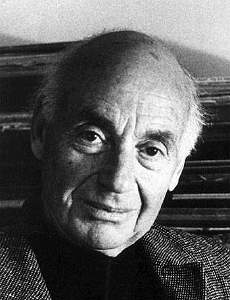
3 He was a Jewish and extremely talented pianist. He was harassed and threatened by the Nazi's for years for being jewish and politically unreliable. It was in 1933 that the Nazis ensured he was fired from all positions and his works were banned. In the spring of 1935 he emigrated to England. After his flight to england his career as a composer declined and he found it increasingly difficult to compose. He only regained his popularity in the 1980s.
 |
| Wilhelm Furtwangler |
3 A major public figures, and one of the few who actualy made any sort of complaint as to the treatment of the Jews in Nazi Germany. In 1933 when the Nazi's protested that there were Jews in the orchestra he threatened to cancel if they were removed.
Never bowing completely to Nazi authority he consistently protested the presence of flags and Hitler salute in concert halls. After he took over leadership over the Vienna Philharmonic, he tried to use his influence to protect its Jewish and leftist members (and succeeded with a few). After the war he was subject to the ban, however in one of the trials he managed to convince them that he had remained in Germany in order to resist totalitarianism and to preserve German music. He was firm in the belief that he had done the right thing. Ultimately his allegiance lay with his art, not the people involved.
Many musicians both German and Jewish have forgiven him, but Goldschmidt publicly condemned him calling him a weak character.
Sources:
1http://fcit.usf.edu/holocaust/arts/musreich.htm
2 http://en.wikipedia.org/wiki/Main_Page
3 http://holocaustmusic.ort.org
4 http://books.google.ca/books/about/Hans_Hotter.html?id=X629aJ7GdyYC&redir_esc=y
5 http://www.express.co.uk/posts/view/298185/Sisters-of-mercy-Sisters-of-mercy-Sisters-of-mercy-Sisters-of-mercy-Sisters-of-mercy
Comments